
Send the fence line
Run length in metres, your suburb, the height you have in mind, and whether a neighbour shares the boundary. A photo of the existing fence says more than a paragraph.
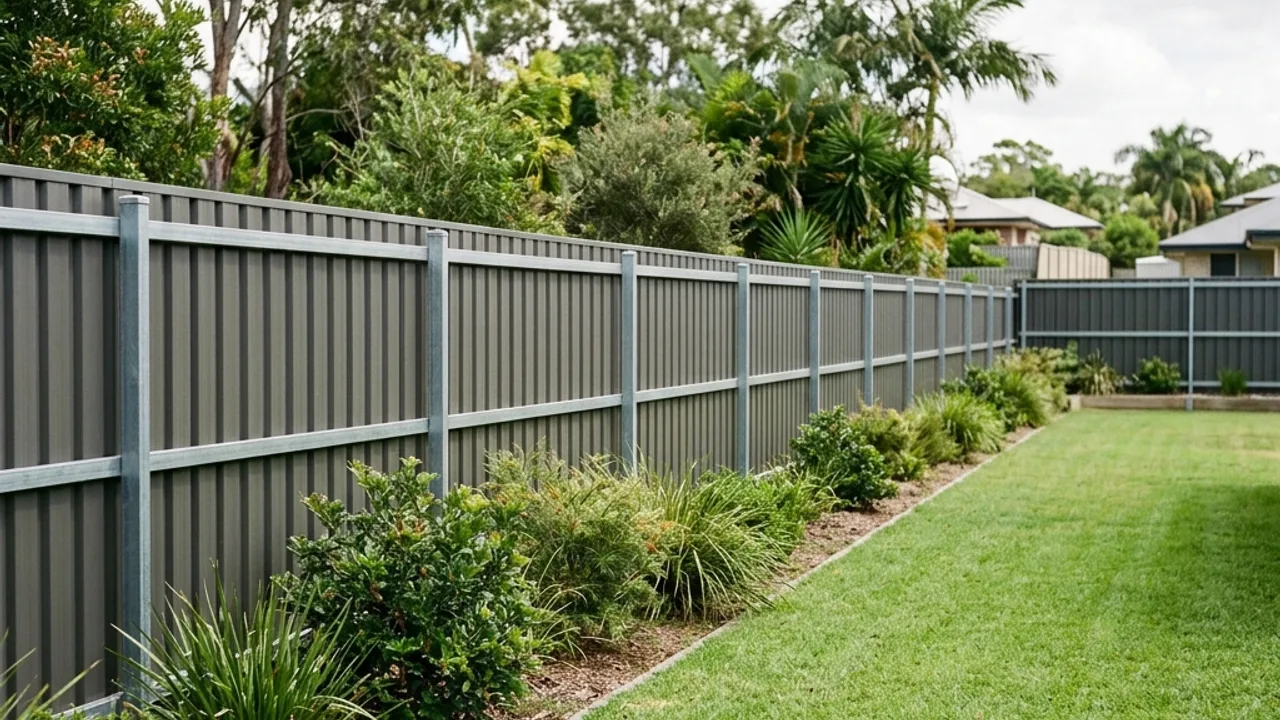
Steel sheet is the default boundary fence across the district's suburban core, and usually for sound reasons. Here is what it costs to own, how high you can go, and what an adjoining owner is actually obliged to put in.
Most people reading this are pulling out a tired timber paling run on a suburban block at Morayfield, Burpengary or Narangba, and Colorbond is the front-runner because both neighbours already have it. The assumption underneath that choice is usually that steel is the expensive upgrade. Counted across the life of the fence rather than off the invoice, that is often not the case. Colorbond is BlueScope's pre-painted steel sheet system, so what you buy is a coated steel panel between steel posts and rails, not a painted surface you have to keep recoating every few years. Send the run length, your suburb and whether a neighbour shares the boundary. What follows is a measured site visit: the fence line gets walked, the fall and the machine access get checked, and a fixed price goes in writing before anything is ordered.
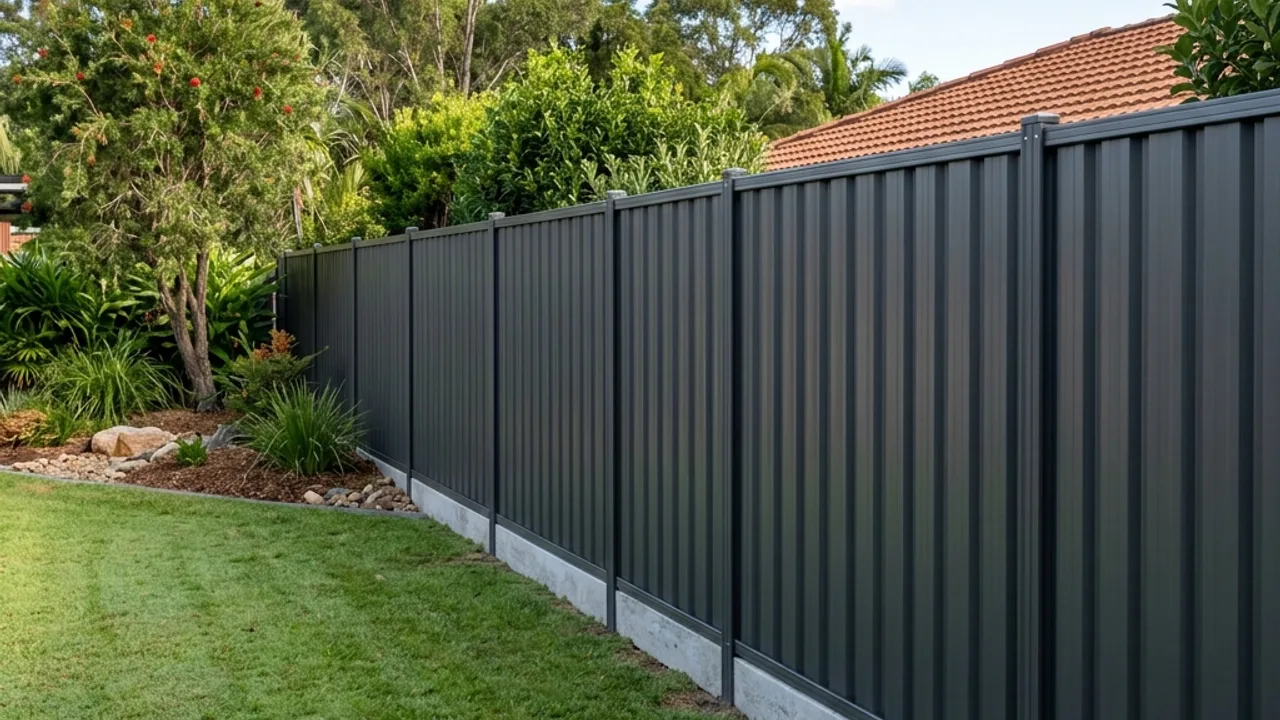
A full run of pre-painted steel sheet between steel posts and rails, set out from the surveyed boundary and stepped in level bays where the ground falls away.
The old palings, rails and posts pulled out and carted away, with removal and disposal shown as its own quote line so two quotes can genuinely be compared.
Slat or lattice toppers and capped posts where a little more height or a tidier top edge is wanted above a standard sheet run, kept inside the height that block allows.
Woodland Grey, Monument and Basalt sit naturally against most district brick, render and roof colours. The sample is held against your house in daylight, not chosen off a brochure.
1.8 m is the usual height. Above 2 m from natural ground the fence becomes building work needing a certifier, so height is settled before any sheet is ordered.
Salt air off Moreton Bay works on the fixings before it works on the sheet, so bracket and screw grade is specified for exposure at Deception Bay, Beachmere and Bribie Island.
The comparison worth making is not sticker against sticker. Colorbond carries more cost in materials and less in labour, because once the posts are set a sheet run goes up quickly. Timber inverts that: cheaper boards, more hours on site assembling them, and then a sealing or oiling cycle for as long as you own it. Add those cycles in and the gap between the two narrows considerably. It rarely closes to nothing, and it is rarely the multiple people brace themselves for.
What actually moves a Colorbond number on your block is specific and local. Run length and sheet height set the base. How much the ground falls decides how many stepped bays the run needs. Whether a post-hole machine can get down the side of the house changes the labour completely. Whether the digging is river-floodplain ground at Caboolture South, reactive clay further inland, or loose sandy ground near the bay changes footing depth and concrete volume. Then there is old-fence removal and disposal, and every gate sitting in the line. A bare per-metre figure quoted without those qualifiers beside it was priced for somebody else's fence.
That is why the price follows the measure rather than a message. The run is walked, the fall is read, access is checked, and the number comes back fixed and in writing with removal and disposal itemised on its own line. Contractors treat that line inconsistently, and until it is separated out you cannot tell which of two quotes is genuinely cheaper.
A fence built on the boundary is a dividing fence, and the Neighbourhood Disputes (Dividing Fences and Trees) Act 2011 governs how the cost is shared in Queensland. Adjoining owners generally contribute equally to a sufficient dividing fence, which is the plain-language name for the basic standard the law expects two households to split. For residential land that means between 0.5 m and 1.8 m high and substantially of the materials the Act lists, covering timber palings and lattice, chain wire, metal panels or rods, brick, rendered cement, concrete blocks, a hedge, and other material a dividing fence is ordinarily built from.
The word carrying the weight there is sufficient. Your neighbour's obligation is measured against a basic fence at that standard, not against the height, colour or finish you have pictured. Anything beyond sufficient is yours to cover. That is far better to learn on this page than at the invoice, and it is precisely why a written quote matters: it puts a figure on paper that both households can sit down and look at together.
Where the conversation stalls, the formal step is a notice to contribute, which is the approved form one owner gives the other asking them to share the cost. It names the land, the fence line, the type of work and the estimated cost, with at least one written quotation attached. If there is no agreement within one month, either owner may apply to QCAT within two months of the notice. Split invoicing is available so each household is billed its own share. What nobody can tell you is how your neighbour will respond.
Run length in metres, your suburb, the height you have in mind, and whether a neighbour shares the boundary. A photo of the existing fence says more than a paragraph.
The boundary is confirmed from the title plan or existing survey pegs, the fall is measured so the stepped bays can be set, and machine access is checked before any figure is put forward.
Sheet height, run length, colour, gates and old-fence removal itemised separately, with a stated validity period so the number holds while you talk to next door.
Posts footed to suit the ground and the block's exposure, sheets fitted once the concrete has cured, the old fence taken away and the run left swept.
Reactive clay swells wet and shrinks dry, and it leans an under-footed post within a few seasons. Footing depth, post spacing and concrete are set from what the auger actually finds at the measure, which is a different answer at Bellmere to what it is on sandy ground at Ningi.
A bayside fence usually fails at the fixings first, not in the sheet. Bracket and screw grade for a run at Deception Bay, Beachmere or Banksia Beach is chosen for that exposure and named on the quote, rather than defaulted to whatever is on the truck.
Where the fence line is shared, each household can be invoiced its own portion, so nobody is chasing the other for money and the paperwork matches whatever the two of you agreed in writing.
On materials, yes. Installed, the gap narrows because a sheet run erects faster, and across the years timber adds a sealing cycle that steel does not. Compare what the fence costs to own, not the material invoice on its own.
No honest figure exists until the run is measured. Material, height, run length, how far the ground falls, machine access, the ground type at post positions, old-fence removal and any gates each move it. The cost calculator on this site shows those drivers with your own inputs.
They contribute toward a sufficient fence at the 0.5 to 1.8 m prescribed-material standard, and metal panels sit inside that standard. Extra height or a finish beyond sufficient is yours. Agree the material and the standard in writing before anything is ordered, and no outcome is promised here.
Salt air is real and it attacks the lower-grade fixings well before the sheet. The answer is fixing and bracket grade chosen for the site's exposure and footings set for sandy ground, assessed at the measure. That is a specification, not a blanket promise.
Questions Caboolture-district homeowners bring to this job, answered plainly.
Pick your suburb for the local ground, salt-air and access notes, or send the form and we will come back with a written quote for colorbond fencing.
Talk to a Caboolture fencing specialist
Planning a Colorbond fence in the Caboolture district?
Send the run length, your suburb and whether a neighbour shares the boundary. You get a measured site visit and a fixed written quote you can put in front of that neighbour.