
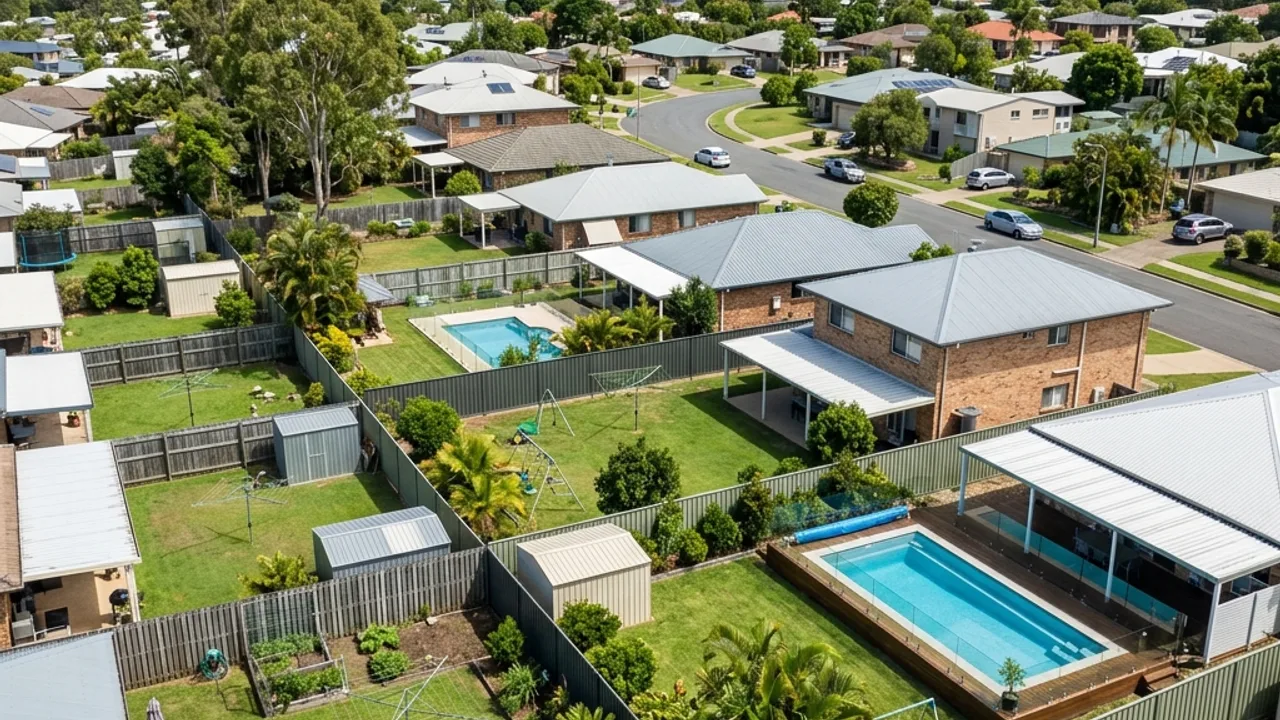
Deception Bay postcode 4508, Caboolture
Fencing in Deception Bay
A bayside suburb of flat, sandy-soil blocks close to Moreton Bay, where salt air exposure and older timber fencing stock make Colorbond and PVC replacement a frequent job.
Fences fail faster near the water, and Deception Bay is close enough to Moreton Bay for that to be a genuine planning factor rather than a talking point. What kills a fence here is usually the fixings and the ground rather than the panels. Below is what salt air actually does, what sandy soil means for a post hole, and which materials earn their price in this pocket.
Fencing in Deception Bay: choosing for salt air, not just for looks
Salt-laden air accelerates corrosion, and it goes after the smallest steel components first. On a fence that means screws, rivets, brackets, hinges and gate hardware fail long before the sheets or the posts show anything. A run can look sound from the footpath while the fixings holding it together are quietly giving up, which is why a bayside fence often seems to fail suddenly. The practical answer is not a different fence, it is better fixings: corrosion-resistant grades specified throughout, including the parts nobody sees, and hardware chosen for coastal exposure rather than pulled from the standard box. That is a small proportion of the total cost and a large proportion of the eventual lifespan, so it is worth asking any quote to state what grade of fixings and hardware it includes.
Material choice follows the same logic. Pre-painted steel panel fencing performs well here when it is installed with the right fixings, and it removes the repainting cycle entirely. Rigid PVC fencing, the vinyl panel and picket system that needs no painting and cannot rot, is genuinely well suited to this exposure because there is very little metal in it to corrode in the first place. Untreated or poorly maintained timber is the material that struggles most, because salt air speeds up weathering and the sealing cycle that keeps timber alive gets skipped as often as not. Plenty of the timber runs being replaced across the suburb are being replaced for exactly that reason.
The ground adds its own requirement. Sandy soil drains fast, which is kind to timber, but it also holds a post less firmly than clay does, so a hole of the same depth gives less grip. The usual response is a footing shaped to spread the load rather than simply a deeper narrow hole, with attention to how the concrete meets the post so water is shed rather than trapped. Gate posts need particular care in sand, because the swinging load works against ground that is already less willing to hold. None of this is difficult, but it is different to how the same fence would be built ten kilometres inland, and a quote written without visiting the block will not reflect it.
Weather is the other thing that brings people here. Severe storms come through the Moreton Bay region regularly and fences take the brunt of them, and the useful thing to know is that a damaged run is priced the same way as any other job: someone measures what actually needs replacing rather than assuming the whole boundary has gone. Very often the posts have held and the sheets or palings have not, which makes the repair a fraction of a rebuild. Two practical steps make the aftermath easier. Photograph the damage before anything is cleared away, because that record is far simpler to capture on the day than to reconstruct weeks later, and get the run made safe rather than tidied up, since removing the evidence can complicate any claim you go on to make. What happens with an insurer is between you and them, but a measured written assessment of the damage is a useful document to have either way.
Why Deception Bay owners ask what the fixings are made of
Fixing grade is specified, not assumed
Screws, brackets and hardware are what fail first this close to the bay. The grade being used is stated in the quote, because that is the difference between a fence that lasts here and one that just looks right on day one.
Footings shaped for sandy ground
Sand holds a post differently to clay. Footing shape and volume follow what the hole actually shows on your block, with extra attention where a gate post has to carry a swinging load.
Material advice matched to the exposure
Steel with the right fixings and PVC both suit this pocket. Timber can work but needs a maintenance commitment, and you get told that honestly rather than after the first few years of weathering.
Fencing across the Caboolture district and its bayside suburbs is what we concentrate on, and regulated work goes to operators who hold a current QBCC licence for it.
About Deception Bay
Deception Bay is the district's largest bayside suburb, a flat sweep of housing running down to the foreshore on Moreton Bay.
Deception Bay State High School anchors the education catchment, the Deception Bay Shopping Centre serves the local trade, and the Deception Bay foreshore gives the suburb its long open edge on the water. Deception Bay Road is the main spine, with Bailey Road and O'Leary Avenue carrying much of the residential movement. The housing spans several decades, from older detached homes on flat rectangular allotments through to newer infill and unit development, and the ownership mix includes a substantial rental share alongside long-term owner-occupiers. A lot of the existing fence stock is timber that went up when the streets were first developed, which is why replacement work rather than first-fence work dominates the enquiries from here.
What the bay does to a Deception Bay fence line
Exposure varies street by street, and it matters. A boundary a few hundred metres from the foreshore carries a heavier salt load than one back near Deception Bay Road, and the fixings specification should reflect that difference rather than treating the whole suburb as one condition. The blocks themselves are flat and regular, which keeps set-out simple, but the older side accesses off Bailey Road and O'Leary Avenue are often narrow, with carports and add-ons built up close to the boundary, so materials get carried more often than they get driven in. The other recurring pattern is age: whole streets were fenced in timber at the same time, so a replacement on one boundary regularly reveals that the neighbouring runs are within a season or two of the same conclusion.
Fencing Services Available in Deception Bay
Pick the material or job type that matches what you are planning for a closer look at scope, decision points and compliance.
Get your Deception Bay fence specified
Replacing a weathered fence in Deception Bay?
Tell us how close you are to the foreshore and what the current fence is made of, and we will help you work out what will actually last on your block.
Tell us what is happening in Deception Bay and we will help you take the next step.
Your details help us understand what you need and respond clearly.
Adjacent Suburbs We Also Cover
Deception Bay meets Narangba and Burpengary East on its western side and runs toward Rothwell along the bay. The salt exposure eases as you move inland from the foreshore, which is why the same fence specification does not suit every street here.
Also adjoining Deception Bay: Rothwell.
Other Caboolture Suburbs
Fencing Questions From Deception Bay
The questions that come up most on Deception Bay enquiries, answered as they apply in Queensland.