
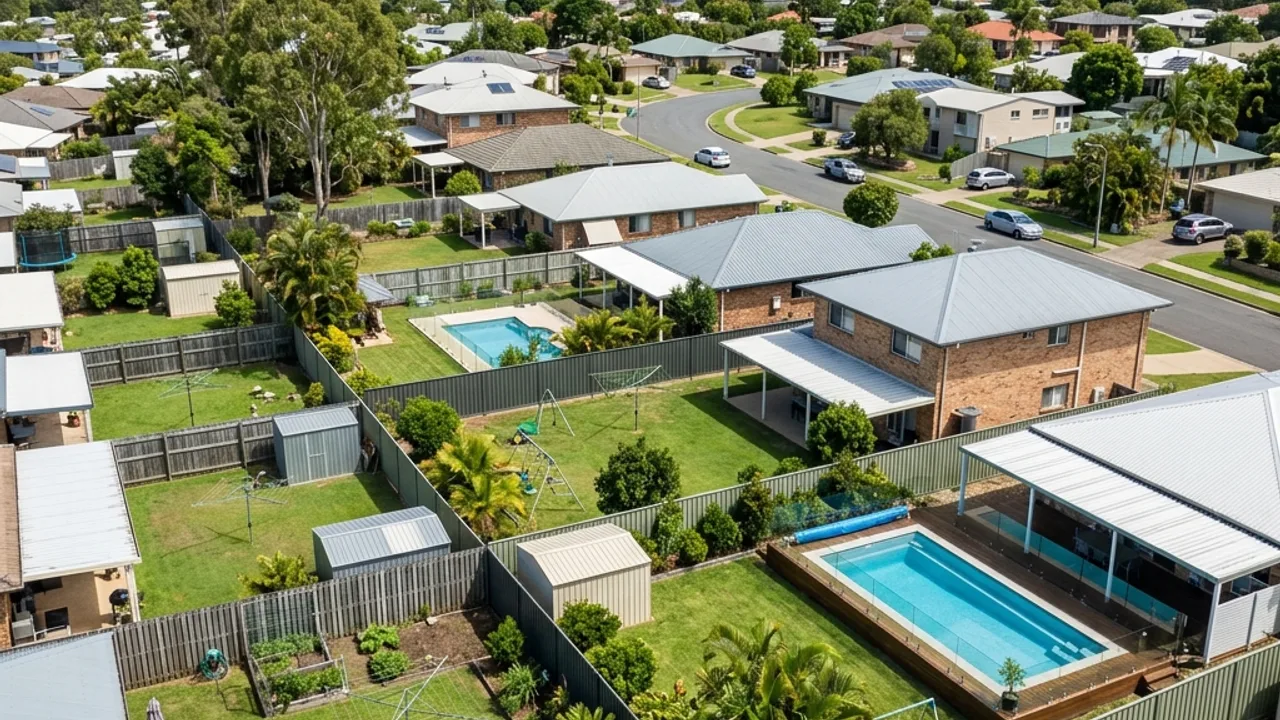
Burpengary postcode 4505, Caboolture
Fencing in Burpengary
A well-established suburb around Burpengary Plaza and the train station, with a mix of 1990s brick-and-tile blocks and newer builds where full-perimeter fence replacements are common.
A lot of Burpengary fences are hitting the same birthday at once. The brick-and-tile estates that went up through the 1990s were fenced when they were built, and thirty-odd years is roughly where a timber run stops being worth patching. Below is how to tell repair from replacement, what the timber options actually differ on, and why staging the work is often the smarter move.
Repair or replace: fencing in Burpengary after thirty years
The honest test is where the failure is. If a run is leaning or sagging in one place, a single post has usually failed at the ground line while the rest of the structure is sound, and replacing that post plus the affected rails is genuinely worth pricing. If the palings are cupping along the whole length, if more than a couple of posts move when you push them, or if the rails have pulled away from multiple posts, the run is telling you it is finished and a patch will simply move the problem three metres along. A measured look settles that in a few minutes and can save a large amount of money, so it is worth asking for the repair option to be priced even when you suspect the answer is replacement.
If it is a replacement, the timber decision is mostly about the gap. Butted palings are fixed edge to edge, which is the budget style, and small gaps open as the timber dries and shrinks. Lapped and capped overlaps each paling with the next so no gaps appear at all, and finishes with a capping board along the top, which is the premium privacy option and reads as a deliberate fence rather than a boundary marker. There is a middle ground worth knowing about too: a good-neighbour fence alternates the palings so the run looks the same from both sides, which removes the argument about who gets the good side and often makes a cost-sharing conversation easier than it would otherwise be.
Staging is the part people rarely think to ask about. A full perimeter on a standard Burpengary block is three separate boundaries with three separate neighbours, and there is no rule saying they have to happen together. If one neighbour is ready and another is not, doing the ready run now and the rest later is perfectly workable, provided the material, height and colour are recorded so the later sections match. What staging costs you is a second mobilisation, so it is worth being told what that adds before you decide. The alternative, waiting until everyone agrees, sometimes means waiting years while the worst run keeps getting worse.
Height is the last thing to settle and the easiest to get wrong. In Queensland a fence up to 2 m above natural ground is generally accepted development, meaning no council approval is needed provided the siting rules are met, and anything above that becomes building work requiring a certifier. Most replacements here sit comfortably under it. The exception worth checking is a corner allotment, and there are plenty through the streets off Station Road. The Queensland Development Code requires clear sight lines at intersections, so fencing inside the truncation near the corner is kept low enough that a driver can see across it, which surprises owners who assume a corner block simply gets more fence for the same money. Worth knowing too is that height is measured from natural ground, so raising a garden bed against a boundary or building a run on top of an existing edge changes the measurement even though the fence itself has not moved.
Why Burpengary owners get the repair option priced too
Repair is quoted before replacement is assumed
Where a single post or one section has gone and the rest of the run is sound, a repair is the sensible answer and it gets priced that way. Nobody is talked into a full rebuild by default.
Boundaries can be done one at a time
A perimeter is three runs and three neighbours. If only one is ready, that run can proceed now with the specification recorded so later sections match, and you are told what the extra visit adds.
Style differences explained in plain terms
Butted, lapped and capped and good-neighbour builds all look similar in a photograph and behave very differently over ten years. The trade-offs are explained before you choose, not after the palings arrive.
Fencing is the only trade we deal in across this district, and jobs that fall inside the QBCC threshold are carried out by an operator holding the appropriate licence for the material involved.
About Burpengary
Burpengary is one of the district's established southern suburbs, grown around a rail station and a local retail centre rather than a single estate.
Burpengary Plaza serves the local shopping trade, the Burpengary train station puts the suburb on the Brisbane line, and Burpengary State Secondary College draws families into the surrounding streets. Station Road and Burpengary Road carry the main movement, with Progress Road running through the residential fabric. The housing stock is dominated by detached brick-and-tile homes on regular suburban allotments from the 1990s and early 2000s, with newer infill filling the gaps between them. Ownership is heavily owner-occupier, and many of those owners are second or third residents of a house built for someone else, which means the fence they inherited was chosen by a builder on a budget rather than by anyone who intended to live behind it.
What shapes a fence line in Burpengary
The suburb fences in waves, because whole streets off Progress Road were built and fenced within a few years of each other and are now reaching the same end point together. That has a practical upside: neighbours are often thinking about the same problem at the same time, which makes the cost-sharing conversation easier than it is in a mixed-age street. The blocks themselves are regular and mostly level, so set-out is straightforward, but side access on the older homes is tight where a carport or a shed was added later and now sits hard against the boundary. Around the station and along Burpengary Road, older properties on larger parcels break the pattern with longer runs and mature planting sitting right on the line.
Fencing Services Available in Burpengary
Pick the material or job type that matches what you are planning for a closer look at scope, decision points and compliance.
Get your Burpengary fence assessed
Repairing or replacing a fence in Burpengary?
Tell us what has actually gone wrong, whether it is one section or the whole run, and we will help you work out whether a repair is worth doing first.
Tell us what is happening in Burpengary and we will help you take the next step.
Your details help us understand what you need and respond clearly.
Adjacent Suburbs We Also Cover
Burpengary sits between Morayfield to the north, Burpengary East across the highway and Narangba to the south. The estate ages differ noticeably across those borders, which is why the same length of fence can be a very different job a suburb away.
Other Caboolture Suburbs
Fencing Questions From Burpengary
The questions that come up most on Burpengary enquiries, answered as they apply in Queensland.