
Caboolture South postcode 4510, Caboolture
Fencing in Caboolture South
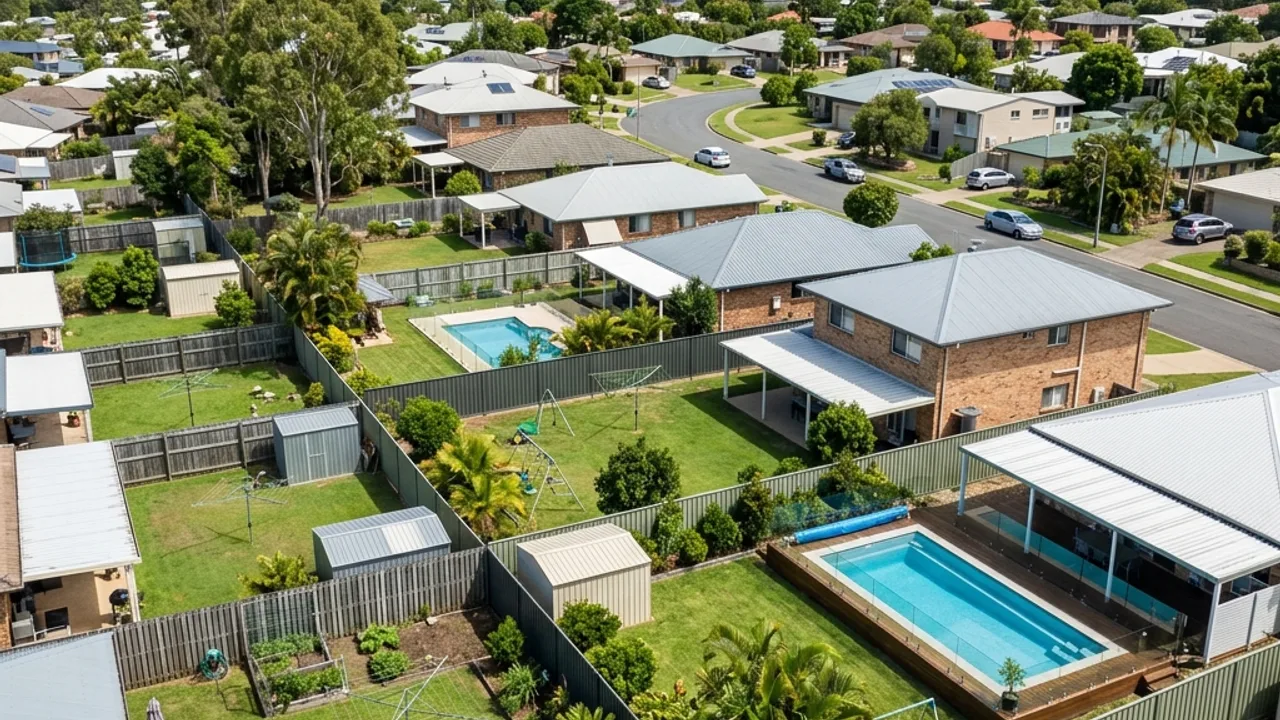
A settled residential pocket south of the town centre along the Caboolture River flats, where low-lying blocks make fence footing depth and drainage the first conversation.
Caboolture South sits low, and that single fact changes almost everything about how a fence should be built here. Water that sits around a post is what ends most runs in this pocket, well before the palings or the sheets give up. Here is what the ground does, how a run gets detailed to survive it, and what should be written into the quote.
Building a fence in Caboolture South that survives wet ground
The ground along the Caboolture River flats holds water longer than the higher ground north of the town centre, and post holes here often show it during the dig. That matters because a fence fails from the bottom up. Timber posts rot at the ground line where wet soil, air and timber meet, and steel posts corrode at exactly the same point. So the detail that decides how long a run lasts is not the material of the face, it is what happens in the first 100 mm above and below the soil. Getting that right usually means a footing sized deeper than a standard suburban spec, concrete finished so water sheds away from the post rather than sitting in a collar around it, and post material chosen with the wet in mind rather than the price list.
On a timber run, the other piece is the plinth, the horizontal board that runs along the ground under the palings to close the gap and keep the paling ends out of the soil. Skip it and the bottom of every board wicks moisture up through the grain and the run gets soft along its whole length within a few seasons. On a steel panel run the equivalent decision is ground clearance: a small deliberate gap under the panel that lets water and debris pass rather than banking against the sheet. Neither of those adds much to a quote, and both are the difference between a fence you replace once and a fence you keep patching.
There is a drainage question on top of the durability one. A solid fence across a low point acts like a small dam when water moves overland, which loads the panels, banks debris against them and can push a section over. Where a run crosses ground that visibly carries water, the practical answers are a deliberate gap under the run, an open-style section at the low point, or panels detailed so a heavy flow passes through rather than against them. That is a conversation to have at the measure, standing on the ground, rather than after the first serious downpour. It is also worth knowing that a fence up to 2 m above natural ground is generally accepted development in Queensland, so raising a run to clear the low ground is usually a build decision rather than an approval problem.
Material choice on the flats deserves more thought than it usually gets, because the useful comparison is what each option costs to own rather than what it costs to buy. Timber remains a real answer and it still looks right on these streets, but on damp ground the boards nearest the soil go first and the sealing routine that slows that down is the part people abandon after the second year. Pre-painted steel panel fencing takes the repainting cycle away entirely, and its vulnerable point sits at exactly the same height, which is why the base detail and the footing matter far more here than the gauge of the sheet does. Rigid PVC fencing, the vinyl panel system that cannot rot and never needs painting, is worth pricing on a low block for that reason alone. Counted over fifteen years the gap between the three is narrower than the sticker prices suggest, and on this ground the cheapest purchase is rarely the cheapest outcome.
Why Caboolture South owners ask about footings first
Footings sized from the hole, not the catalogue
Depth and concrete volume follow what the ground actually shows during the dig on your block. On damp flats that usually means more than a standard suburban footing, and it is stated in the quote rather than discovered afterwards.
The ground-line detail is part of the scope
Plinth boards on a timber run, or a deliberate clearance under a steel one, are quoted as scope rather than treated as an upsell. This is the detail that decides whether the run lasts here.
Water movement gets looked at on site
Where a boundary crosses low ground, how the run will behave in heavy rain is worked out before panels are ordered. A solid fence in the wrong spot becomes a dam, and that is a design problem, not a maintenance one.
We work on fencing across the Caboolture district and nowhere else, with appropriately QBCC-licensed specialists handling work that falls inside the regulated threshold.
About Caboolture South
Caboolture South is the settled residential band between the town centre and the Morayfield retail strip, sitting on the flatter ground beside the river.
The Morayfield Shopping Centre sits within easy reach at its southern end, the Caboolture River parklands hold the low ground along its edge, and the Caboolture train station catchment pulls commuters into the northern streets. Morayfield Road carries the through traffic, while Lower King Street and King Street run the length of the older residential fabric. Housing here is predominantly detached, on flat rectangular allotments, with a mix of owner-occupiers who have held the same address for decades and a meaningful share of rental stock. Fencing enquiries reflect that split: one group is replacing a run they have watched decline for years, the other is dealing with a fence that has finally failed and needs a defensible number to take to an owner or a property manager.
Ground conditions on the Caboolture South flats
The defining feature is level. Blocks off Lower King Street sit noticeably lower than the ground rising toward the town centre, and a post hole dug on the flats behaves differently to one dug half a kilometre north. Alongside that, the older fence stock in this pocket is heavily timber, much of it well past the point where a repair holds, so replacements tend to be full runs rather than sections. The Morayfield Road frontages add a different constraint again, with driveway crossovers, service pits and verge planting all sitting where a corner post would naturally want to go. And because the allotments are regular and flat, run lengths here are long and uninterrupted, which makes any variation in post depth along the line show up as a visible wave in the top edge.
Fencing Services Available in Caboolture South
Pick the material or job type that matches what you are planning for a closer look at scope, decision points and compliance.
Talk to us about your Caboolture South block
Fencing a low-lying block in Caboolture South?
Tell us the run length and whether water sits anywhere along the line after rain, and we will help you understand what the footings and the detailing need to do.
Tell us what is happening in Caboolture South and we will help you take the next step.
Your details help us understand what you need and respond clearly.
Adjacent Suburbs We Also Cover
Caboolture South shares boundaries with Caboolture to the north, Morayfield to the south and Bellmere across to the west. The flat river-flat ground carries across the first two of those, while Bellmere sits on firmer estate ground.
Other Caboolture Suburbs
Fencing Questions From Caboolture South
The questions that come up most on Caboolture South enquiries, answered as they apply in Queensland.